Roman · Novel
Cebimde Bir Milyon Zaryalı One Million Zaryans in My Pocket
Üç kitaplık serinin ilk kitabı The first of a three-book series
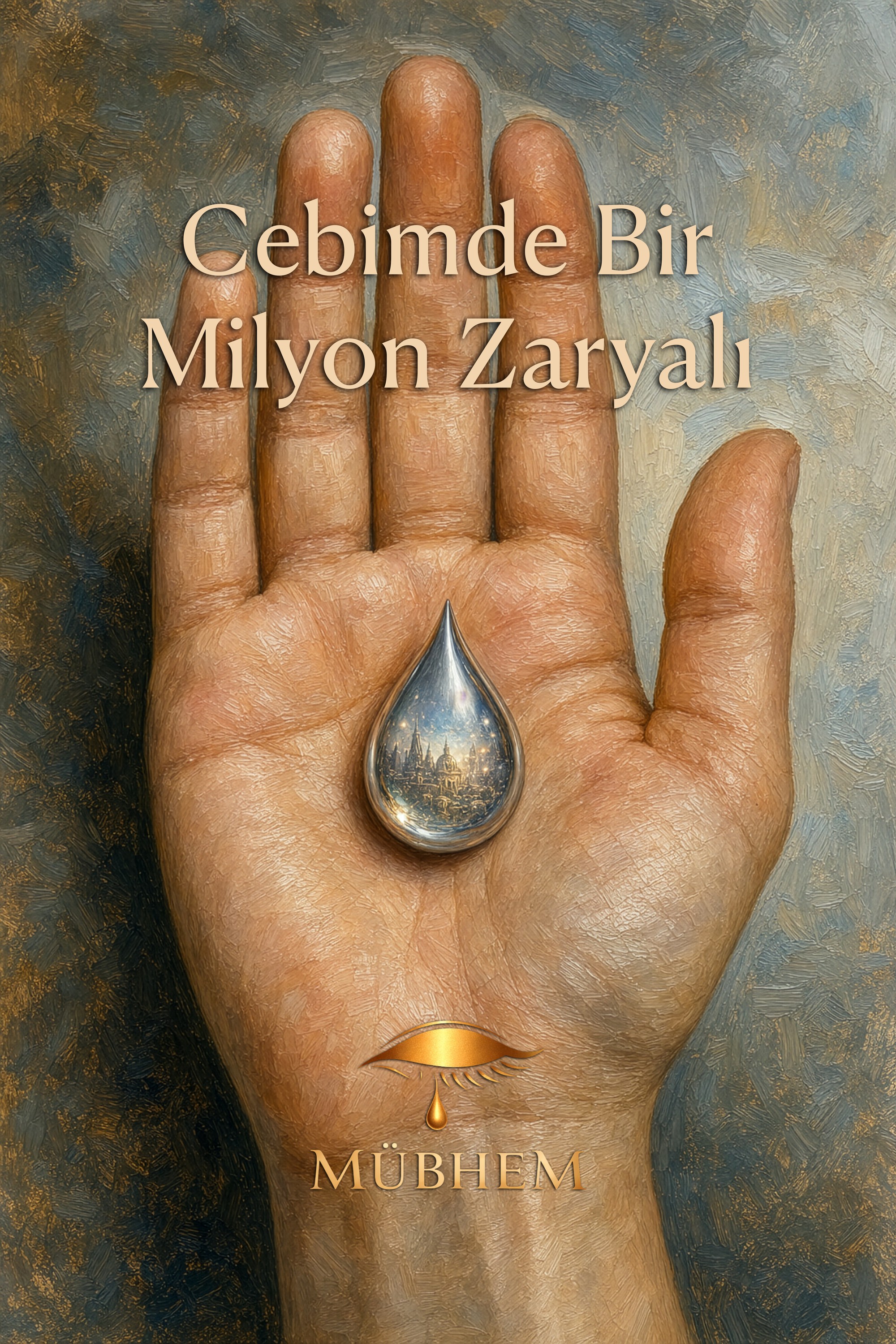
Bir damlada koca bir deniz saklıydı. Cebinde gökten inmiş bir halk, ayağının altında Anadolu. Üç kitaplık bir yolculuğun ilk durağı.
E-kitap
EPUB3 · DRM yok · anında indirme
Paperback
Basılı · ciltsiz
Hardcover
Basılı · ciltli
Örnek Bölüm
Zarya
Şafağın gezegeninde şafaklar öleli üç yüz bin yıl olmuştu.
Kadim dilde Zarya, şafak demekti. Kelimeyi kimin, hangi sabaha karşı ilk kez söylediğini bilen yoktu artık. Dil o günden beri kaç kez incelmiş, durulmuş, kurallara bağlanmıştı ama kimse o tek kelimeye dokunamamıştı. Zarya, dilin hiçbir kuralına uymuyordu. Dilden eskiydi çünkü. Semaran bunu hep bir emanet gibi taşımıştı içinde. Unutulmuş bir sabahı unutmayan bir kelime.
Her uyanışında kulenin tepesine çıkardı Semaran. Kubbenin camına alnını dayayıp dışarı bakmak, onun sabah duasıydı. Kimse istememişti bunu ondan, bu nöbeti kendine kendi yazmıştı. Camın ötesinde gri bir ova uzanıyordu, ovanın ötesinde bir şehrin iskeleti. Kuleleri devrilmiş, caddeleri tozun altında, milyonların yaşadığı sokaklarında üç yüz bin yıldır tek bir ayak sesi duyulmamış bir şehir. Rüzgâr bile uğramıyordu artık oraya. Rüzgârın işi kalmamıştı. Semaran bakıyordu. Unutmamak, liderin işiydi.
Zarya'yı silahlar öldürmedi. Kayıtları izleyen son kuşaktandı Semaran ve kayıtlar bunu açıkça söylüyordu. Silahlar en sona geldi, iş bittikten sonra gelen kalabalık gibi. Önce yalnızca kapılar kapandı. Teknoloji her şeyi herkesin evine getirdiğinde, kimsenin dışarı çıkmak için bir sebebi kalmadı. Sokaklar yavaş yavaş boşaldı. Kimse buna karar vermedi, kimse ilan etmedi, sokaklar sadece her yıl bir önceki yıldan biraz daha boş oldu. Zaryalılar birbirlerini önce ekranlarda görmeye başladılar, sonra ekranların içinde yaşamaya. Orada yeni kalabalıklar kuruldu. Yüzleri olmayan, sesleri olmayan, yalnızca öfkeleri olan kalabalıklar. Yan yana gelmeyen canlılar birbirinden korkar. Korku önce fısıltı oldu, sonra grup, sonra bayrak. Ve bir gün söz bitti. Sokaklarını unutmuş bir halk sokaklara döküldü. Sokağı unutan, orada yalnızca savaşmayı bilir.
İç savaşlar ülkeleri yedi, ülkelerin savaşı gezegeni. On yedi milyar Zaryalıdan geriye üç milyon kaldığında silahlar sustu. Barış kazanılmadı. Savaşacak kimse kalmadı, o kadar. Semaran'ın en çok başını eğdiği gerçek buydu. Halkı barışı bulmamıştı, barışa kalmıştı. Gezegen ise geri dönmedi. Hava zehrini bırakmadı, su unutmadı, toprak affetmedi. Kalanlar kubbeler kurup içine sığındılar ve o kubbelerin altında, üç yüz bin yıl boyunca, tarihlerinin en derin barışını yaşadılar. Bugün mucize dedikleri ne varsa o barışın eseriydi. Ve üç milyon, ortamın sertliğine direne direne, çağlar içinde eriyip bir milyon kaldı.
Bir milyon Zaryalı, gökyüzünde üç şeyle büyüdü. Bir ay, bir güneş, bir de mavi gezegen.
Mavi gezegenin sakinleri kendi göklerinde ikisini bilir, ayı ve güneşi. Zaryalıların göğünde bir üçüncüsü asılıdır ve en güzeli odur. Mavi, canlı, omzunda bulutların beyazı, gece yarısı bile ışıl ışıl. Zaryalı çocuklara ninniler onunla söylenir, kubbe camlarına onun haritaları çizilirdi. Çünkü Zarya, mavi gezegenin hemen dibinde sayılacak bir yörüngede süzülüyordu ve o manzara, Zaryalı için ayın insana göründüğü kadar tanıdıktı. Ama mavi gezegenden Zarya'ya bakan olmadı hiç. Bakan olsa da göremezdi. Mavi gezegenin ölçeğinde Zarya bir karpuzdan büyük değildi.
Ölçek küçüldükçe zaman hızlanır. Zaryalı bir kalp, mavi gezegenli bir kalpten bin kat hızlı atar. Mavi gezegende bir gün doğup batınca, Zarya'da neredeyse üç yıl geçer. Kendi saatleriyle Semaran yedi yüz bin yılı geçmişti. Bilgeler, en yaşlıları, milyonu devirmiş, ömrün sınırına dayanmıştı. Bu kadar uzun yaşayan bir halk için hesap, duadan önce gelir.
Ve Zarya hep burada değildi. Kadim kayıtlar, yurtlarının bir zamanlar çok uzakta, taşların büyük kalabalığında döndüğünü söylerdi. Büyük bir çarpışma onu sürüsünden koparmış, boşluğa savurmuş ve çağlar süren bir sürüklenişin sonunda mavi gezegenin komşuluğunda durulmuştu. Zaryalıların dilinde bunu unutturmayan eski bir söz vardı. Yurdumuz bize bir çarpışmadan geldi. Sözün ikinci yarısını kimse yazmamıştı. Gözcüler yazdı sonunda.
Gözcülerin işi göğü saymaktı. Boşlukta süzülen hiçbir taşın yolu onlardan saklı değildi. Her kırıntının nereden gelip nereye gideceğini, neye ne zaman değeceğini bilirlerdi. Yola dökülen ufak taşları ışığa çevirip geçmek, Zarya için yağmurdan sonra cam silmek kadar sıradan bir işti. Sonra bir gün, sayımın ortasında, bir gözcü sustu. Hesabı üç kez yaptı, üç kez aynı sonucu gördü. Başına toplananlara ekranı çevirdiğinde elleri titriyordu. Karanlığın içinden bir kütle geliyordu, dosdoğru Zarya'nın üstüne. Ve gelen, Zarya'nın iki katı büyüklüğündeydi.
Bilgeler hesabı aldılar. Milyon yılı devirmiş akıllar, ayrı odalarda, ayrı yöntemlerle, günlerce yeniden hesapladılar ve her hesap aynı yere düğümlendi. Rota Zarya'ya çıkıyor, gün ile saat değişmiyordu. Gelen bir kırıntı olsaydı toza çevirirlerdi. Bir taş olsaydı yolundan saptırırlardı. Ama gelen, yurtlarından büyük bir karanlıktı ve bir halkın gücü ne kadar büyürse büyüsün, kendi yurdundan büyük olanı iteleyemezdi. Her şeyi hesaplayabilen bir medeniyet, tarihinde ilk kez, değiştiremeyeceği bir sayının karşısında duruyordu. Bilmek, ilk kez, çare değildi.
Karar yine de tek günde verilmedi. Önce hesap bir kez daha yapıldı, bir kez daha. Umut, akıllı halklarda da aynı çalışır. Sonra fısıltı oldu, sonra herkesin gözünün içinde duran ve kimsenin söylemeye yanaşmadığı bir kesinlik. Söyleme işi, hep olduğu gibi, lidere düştü. Semaran meclisin ortasında durdu ve halkının tarihindeki en kısa konuşmayı yaptı.
"Taşı kurtaramayız. Bizi kurtarabiliriz."
Devamı kitapta.
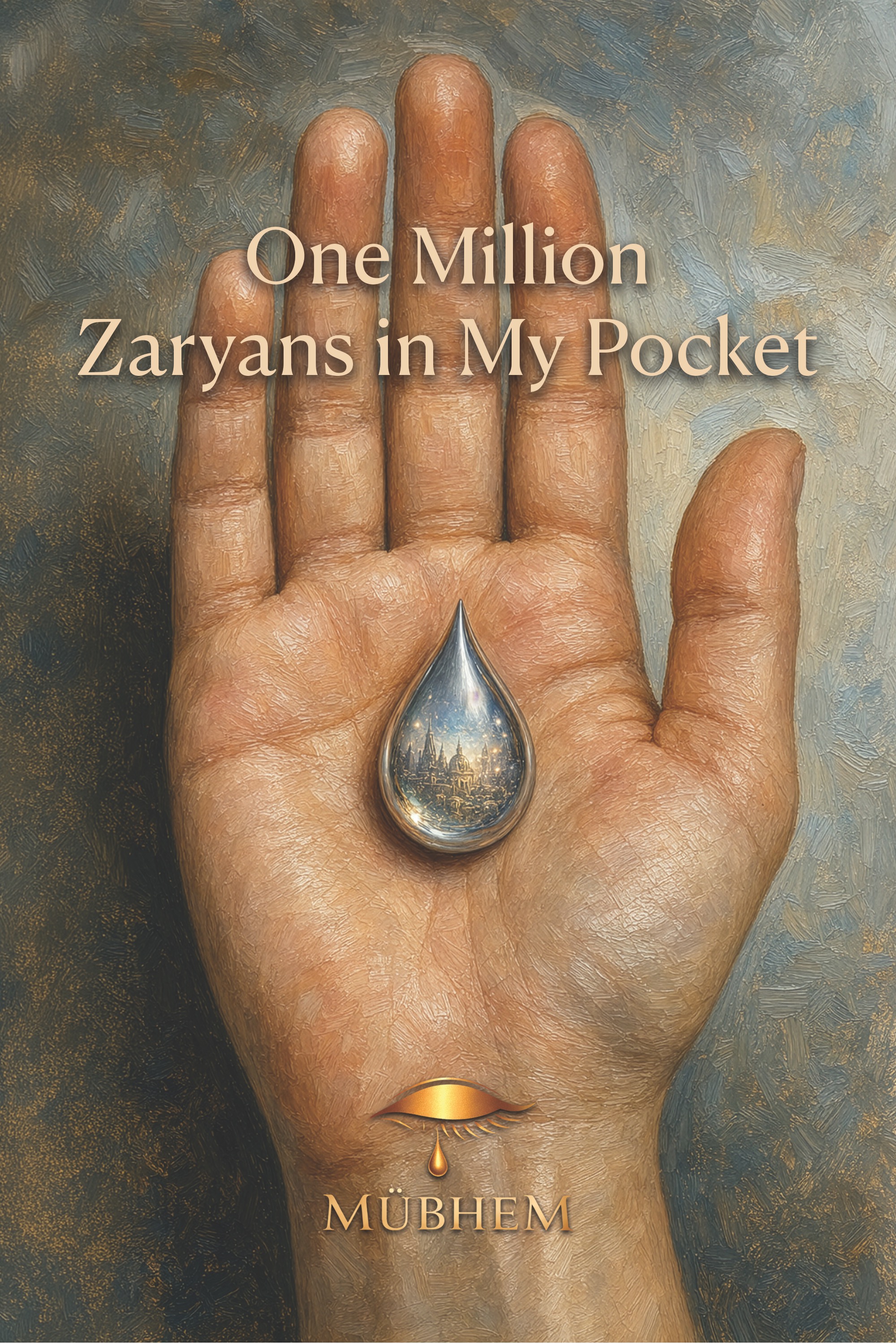
A whole sea was hidden in a single drop. A people fallen from the sky in his pocket, Anatolia beneath his feet. The first stop of a three-book journey.
E-book
Kindle · instant delivery
Paperback
Print · softcover
Hardcover
Print · hardback
Sample Chapter
Zarya
On the planet of the dawn, the dawns had been dead for three hundred thousand years.
In the ancient tongue Zarya meant dawn. No one knew any longer who had first said the word, against which morning. The tongue had thinned since that day, cleared, been bound to rules many times over, but no one had been able to touch that one word. Zarya obeyed no rule of the tongue. Because it was older than the tongue. Semaran had always carried this in him like something held in trust. A word that did not forget a forgotten morning.
At every waking Semaran climbed to the top of the tower. To lay his brow on the glass of the dome and look out was his morning prayer. No one had asked it of him, he had written this watch to himself. Beyond the glass stretched a gray plain, and beyond the plain the skeleton of a city. Its towers toppled, its avenues under dust, a city where for three hundred thousand years not a single footstep had sounded in streets once lived by millions. Even the wind no longer came there. The wind had no work left. Semaran looked. Not to forget was the leader's work.
It was not weapons that killed Zarya. Semaran was of the last generation to read the records, and the records said it plainly. The weapons came last, like the crowd that arrives after the work is done. First, only the doors closed. When technology brought everything into everyone's home, no one had a reason left to go out. The streets emptied slowly. No one decided it, no one declared it, the streets only grew a little emptier each year than the year before. The Zaryans began to see one another first on screens, then to live inside the screens. There new crowds were formed. Crowds with no faces, no voices, only their anger. Living things that do not come side by side fear one another. Fear became first a whisper, then a group, then a flag. And one day the word ran out. A people that had forgotten its streets poured into the streets. One who forgets the street knows only how to fight there.
Civil wars ate the countries, the war of countries ate the planet. When of seventeen billion Zaryans three million were left, the weapons fell silent. Peace was not won. No one was left to fight, that was all. This was the truth before which Semaran bowed his head the most. His people had not found peace, they had been left to it. And the planet did not come back. The air did not let go of its poison, the water did not forget, the earth did not forgive. Those who remained built domes and sheltered inside them, and under those domes, for three hundred thousand years, they lived the deepest peace of their history. Whatever they now called a miracle was the work of that peace. And the three million, resisting and resisting the harshness of the place, melted through the ages down to one million.
One million Zaryans grew up under three things in the sky. A moon, a sun, and a blue planet.
The dwellers of the blue planet know two in their own sky, the moon and the sun. In the Zaryan sky a third hangs, and it is the most beautiful of them. Blue, alive, the white of clouds on its shoulder, bright even at midnight. Zaryan children were sung their lullabies with it, its maps were drawn on the glass of the domes. For Zarya drifted in an orbit that all but grazed the blue planet, and that sight, for a Zaryan, was as familiar as the moon is to a human. But no one from the blue planet ever looked at Zarya. Even one who looked could not have seen it. On the scale of the blue planet Zarya was no bigger than a watermelon.
The smaller the scale, the faster time runs. A Zaryan heart beats a thousand times faster than a heart of the blue planet. When a single day rises and sets on the blue planet, on Zarya nearly three years pass. By his own clock Semaran had passed seven hundred thousand years. The sages, the oldest of them, had passed the million and come up against the limit of a lifetime. For a people that lives this long, the arithmetic comes before the prayer.
And Zarya was not always here. The ancient records said their homeland had once turned far away, in the great crowd of stones. A great collision had torn it from its herd, flung it into the void, and at the end of a drift that lasted ages it had come to rest in the neighborhood of the blue planet. The Zaryans had an old saying that would not let this be forgotten. Our homeland came to us from a collision. No one had written the second half of the saying. The watchers wrote it in the end.
The watchers' work was to count the sky. The road of no stone drifting in the void was hidden from them. They knew where each crumb came from and where it would go, what it would touch and when. To turn the small stones spilled on the road into light and pass was, for Zarya, as ordinary as wiping the glass after rain. Then one day, in the middle of the count, a watcher fell silent. He did the reckoning three times, three times saw the same result. When he turned the screen to those gathered around him, his hands were shaking. Out of the dark a mass was coming, straight for Zarya. And what was coming was twice the size of Zarya.
The sages took up the reckoning. Minds that had passed the million, in separate rooms, by separate methods, reckoned it again for days, and every reckoning knotted at the same place. The route came out at Zarya, the day and the hour did not change. Had what was coming been a crumb, they would have turned it to dust. Had it been a stone, they would have turned it from its road. But what was coming was a darkness bigger than their homeland, and however great a people's power grows, it cannot shove aside what is bigger than its own homeland. A civilization that could calculate everything stood, for the first time in its history, before a number it could not change. Knowing, for the first time, was no cure.
Still, the decision was not made in a single day. First the reckoning was done once more, and once more. Hope works the same even in clever peoples. Then it became a whisper, then a certainty that stood in everyone's eyes and that no one would bring themselves to say. The saying of it, as always, fell to the leader. Semaran stood in the middle of the assembly and gave the shortest speech in his people's history.
"We cannot save the stone. We can save ourselves."
The rest is in the book.
Buy on Amazon